Showing posts with label Helpful Tips. Show all posts

Saturday, January 22, 2011

How is your Dogs Weight?

At the beginning of every year we all are prone to take a look at our lives, access the state of things, and many of us make resolutions to better our lives in one way or another. After all, we as humans have been doing this every 365 days or so for a millennium, and it is a good thing.
So you are looking at yourself, looking at what improvements you can make, and it is a high probability that are now working on your weight. GREAT! Getting healthier is always a noble goal, and losing weight is very high on the list of annual resolutions, but I have a question for you:

How about your dog’s weight?

Obesity in dogs is a problem that is on the rise in America. We as humans are eating more and becoming less active, therefore our dogs are also eating more and exercising less. Just like in humans this increasing over-eating and inactivity can lead to a HUGE number of very real health issues such as:
  • Diabetes
  • Damage to joints, bones and ligaments (especially in large dogs)
  • Heart disease
  • Increased blood pressure (yes dogs too, can suffer from high blood pressure)
  • Decreased liver function
  • Difficulty breathing
  • Decreased stamina
  • Heat intolerance
  • Increased anesthesia risk
  • Digestive disorders
  • Immune dysfunction
  • Skin hair and coat problems
  • Increased risk of cancer
  • Decreased quality and length of life
I love my dogs (sometimes more than my children) and I want them to have long and healthy lives. I want their lives to be filled with running and jumping, not IV’s and pills and being drugged all the time. This is why we are very diligent about the feeding of our dogs. This leads to one of the biggest questions a dog owner will have:

How much SHOULD I be feeding my dog?

This can be a more difficult question to answer than you might think. If you have a medium to low energy dog it gets even more difficult. Did you know the ‘recommended feeding suggestions’ on the back of dog food is aimed at an “intact, male working dog?” Since your dog is NOT intact (and if it is you need to get it altered now, but that is another article) and it is probably not a working dog (meaning herding or pulling all day), this means that if you are following these suggestions  you are over feeding your dog, and potentially by a large amount.

A dog that is healthy should  always be hungry. This is a behavioral throw back to the wild dog days. Since they never knew when or where their next meal might be, they would eat anything they found when they found it. Since your dog is NOT a wild dog foraging for food, they should be on as schedule. Whether once a day or twice a day is up to you, but you need to be consistent. Same amount, same way, every day.

As far as making a recommendation goes I will only tell you what we are doing for our dogs. For the new reader we have Hondo, a 2 ½ year old Shiba Inu who is 19 pounds, and Jethro, a Pit Bull that is about 78 pounds. We feed them twice a day, and Hondo gets 2/3 of a cup and Jethro gets 1 ½ cups at each feeding. We feed them a good quality dry food (no corn of gluten please!) and put a little hot water on top of the dry food to make a little gravy in the bowl. We will occasionally mix in with this some drippings or other scraps.
Exercise is also a very important part of the equation, just like for you. “The Boys” and I walk generally at least once a day, and we walk at least a mile or so up and down hills. On top of this we have a large yard that they use and run around in during the day, so they get a decent amount of exercise.

If your dog is obese or overweight or you feel it may be, the first step is of course to consult your Vet. They are the first and best source for information on the health of your dog. However, here are a few suggestions:
  • Start a weight chart, and begin to track your dogs weight.
  • Exercise! Exercise! Exercise! – Not only will this help your dog’s weight, but will have a surprisingly positive effect on yours (I am down about 30 pounds in a year!)
  • Feed a better quality food, in smaller amounts, twice a day. We have found this better than a big meal every morning
  • Limit treats, and make sure they are GOOD treats. You would be surprised at how bad some of the commercial treats are for your dog. Make sure you read the packages, and find a good quality treat. Honeycomb cereal is one of Jethro’s favorites, but then again, he eats everything

I will bet a lot of these things sound surprisingly like the same things that YOU should also be doing for you weight. So, make your resolution, but include your dog.Work on your eating and your weight, but help them to work on theirs also. They would like to look slim and hot this summer too!

Tuesday, January 4, 2011

Dog Training is a Family Affair

Dogs are pack animals. While this may seem a little “DUH!” obvious on the surface, this utterly simple concept is quite often ignored or just missed by some dog owners. Dogs are happiest when part of a structured social group with rules and boundaries. Their entire existence is based upon the fact that they are part of a social structure with very specific roles and responsibilities. What does this means to you? Well simply put, if you have a dog (or dogs), anyone in your house is part of their pack. Whether a family member including Jodie, Buffy, and Mr. French (I HAD to get a reference in here somewhere!), or a roommate that is renting the spare bedroom, this is their pack.

In every pack there are leaders (Alphas) or dominate members, and followers (Betas) or submissive members. As a pack member, your dog is happiest when it does not have to think and can just be a dog. They like knowing their place, what they can and, most importantly, CAN NOT do.  There is a long list of common behavior issues that begin to arise when the lines and social strata are blurred, and the dog must decide for itself who is an Alpha and who is a Beta. When this happens, family members may be deemed as a Beta by your dog that will of COURSE see itself as an Alpha, or even THE Alpha. This can lead to dominate, aggressive, or even potentially dangerous behaviors.

In the world of good vs. bad dog behaviors, this is very high up on the BAD list. Your dog should never have to decide anything for itself, but instead know what is expected from it at all times. From the moment it comes into your home it should know its place in the social hierarchy and that all humans are Alphas over it. Quite simply put, when not all pack members are not applying rules and discipline equally you will end up creating your own “monster.”

How do you avoid becoming your dogs Dr Frankenstein and creating a “monster” out of your wonderful, loving pet? It is quite simple actually, and all it takes is education, communication, and repetition:
  • Education - Read, Research, Learn
    • Educate yourself on how to effectively communicate with your dog
    • Use this as the foundation for setting the rules
  • Communication - All humans must be on the same page
    • This means that the rules must be discussed, agreed upon, and enforced – every time, all the time. Whether the dog IS or is NOT allowed on the couch is irrelevant. What is important is that whatever the rule is everyone enforces it the same
    • These rules need to be simple and unambiguous. Confusing the dog with complicated rules and too much talking is a common problem
  • Repetition - So often the root cause of behavior issues can be traced directly to unequal application of discipline
    • Every Time, All the time!
    • The rules MUST be consistently enforced by all other Alpha pack members, meaning the humans
It does not matter if you are looking for your first dog or have had the same dog for years, the plain simple truth is this; it is never too late to start being a better more responsible dog owner. One of the wonderful things about dogs is that, as you become a better owner, they learn their place very quickly and actually reward you for being a better owner by becoming a better dog. Try it and I am confidant you will find this to be true. Please visit us at CapawbleHands.org for additional information about how to be a better owner.

Disclaimer: If your dog has any behavior issues that concern you or you feel may be unsafe, please contact a professional dog trainer for a consultation.

Saturday, January 1, 2011

Chip Your Dog and Get Them Back!

Recently a friend of ours was celebrating New Years Eve in their backyard with their whole family, including their 1 year old long-haired German Shepherd. At some point in the festivities, the dog decided she wanted to ‘run with the moon Jackie’ (Stephen King Reference, know it?) and hopped the fence and ran off. This issue was exacerbated by the fact it was now 1:00 am, very dark, and in a very rural setting meaning nothing but fields for a couple of miles in any direction. The owner was frantic over her missing dog, and began that mental and emotional roller coaster I hope none of you ever has to know.

Fortunately about 3 hours later, from out of the cold and snow a familiar sound of dog nails on stone patio and a scratch at the door turned into a joyful family reunion. Unfortunately, statistics tell us that the majority of dogs that get our or are otherwise lost are not so fortunate. According to the American Humane Association, only about 17% of lost dogs are ever reunited with their owners. For people like us, to whom their dogs are like their children, this is a terrifying statistic. 
Yes, even when you do everything right and carefully watch, sometimes the worst can and does happen. Fortunately, there is something that owners can and SHOULD do to greatly increase the odds of their dog coming home should the worst happen, and that is microchipping. 


Microchipping involved implanting a tiny computer about the size of a grain of rice under the dog’s skin between its shoulder blades. This permanent marker has a registration number that, when scanned by any shelter or animal control officer, will tell them the owners name and contact information. This means that your dog comes home, and does NOT go back into the adoption cycle that, for so many ends up in euthanization.


Every dog can and will get out at some point. This is a fact. Another fact is that collars can come off or be taken off. Yes, people out there will steal your dog right out of your yard. A microchip is the ONLY way to give yourself a fighting chance to prove your dog is yours, and for them to come back home.

Some simple facts about the microchip:

  • Microchips are designed to last for the life of a dog. They do not need to be charged or replaced.
  • Some microchips have been known to migrate from the area between the shoulder blades, but the instructions for scanning emphasize the need to scan the dog’s entire body.
  • A microchipped dog can be easily identified if found by a shelter or veterinary office in possession of a scanner. However, some shelters and veterinary offices do not have scanners.
  • Depending on the brand of microchip and the year it was implanted, even so-called universal scanners may not be able to detect the microchip.
  • Microchip manufacturers, veterinarians and animal shelters have been working on solutions to the imperfections, and technology continues to improve over time.
You have invested your love and your time, and the love and time of your family, and who KNOWS how many hundreds or thousands of dollars to keep your dogs safe and healthy. For about $50.00 or less, you can significantly raise the odds that, should the worst happen, your child will come home.

Thursday, December 23, 2010

Is Your Dog Walking You?

Walking a dog is supposed to be a simple, enjoyable activity for you and your dog. an opportunity to get outside and, for a few minutes to a few hours, enjoy some time together and some exercise. However, so often I see the supposed activity ruined by dogs that pull like they Balto hauling the diphtheria medicine to Nome! This mutual activity becomes about your dog hauling you around the neighborhood, completely ignoring you to snuffel and sniff and do whatever HE wants.

It is simple; If the dog is in FRONT of your hip, the dog is walking YOU! If your dog is walking you, then he is in charge and you are the follower. This is "bad" for you and your dog on a number of different levels, and will hold your dog back from becoming the dog both you and he wants to be. It sets the expectation that the dog is in charge, and that he decides where to go and what to see. This behavior can and will translate into every other area of your interaction with this dog. It is not uncommon for owners to report that the dog "suddenly" developed some aggressive behavior that he never did before. Untrue, it was there all along, the owners just don;t or refuse to see.

Tip #1 - Correct dog walking begins with selecting the right equipment. 
No, a harness designed for PULLING is not the correct equipment (Hello, clue phone time!) If you decide you like the idea of a harness (as Bekki did with Jethro) find one that does not allow the dog to pull, like the Premier Easy Walk Harness. Otherwise, any pinch style collar will work, as will a Martingale or old fashioned "choke chain" style collar (an unfortunate name, as it does not in fact choke the dog when used properly.)

Tip 1A - Educate  yourself on how to properly use the tool you have decided upon. 
This is not really it's OWN tip, but is a portion of #1 that MOST people blow off, and it a very critical step. Read the instructions in the package, look your tool up online and see if there are any videos showing proper usage. Know your tools and how to Properly adjust and use them!

Tip #2 - ALWAYS lead the dog through any door or obstacle.
Proper dog handling technique begins now. This is one of the most important techniques to use with (not ON) your dog, and it is one of the simplest ones. You are the Alpha, they always follow you. This simple technique sets the tone for everything down line and should be followed religiously.

Tip #3 - Walk Your Dog!
No, this is not just a matter of getting out the door and walking. You have to have a process, and you have to follow it every time. With our dogs my process is as follows:
  1. I make them come to the front door area and SIT and wait until I am ready to get them ready.
  2. Then I leash them both and make them continue to SIT and wait until I (or we) are ready to go. 
  3. I go out the door first, and lead them to the sidewilk where I make them SIT. Why all the sitting? I believe it helps me establish this is a structured walk, not a free for all like when we go to the beach, etc. It helps me to stop and center myself. Your energy will translate to your dog. If you are calm and ready, they will be also.
  4. When I am ready, we will begin our walk with me giving the Heel command. The dog may try to go in front of me, but I use the tools I have to let them know NO, you follow by giving a quick corrective tug/jerk on the lead and then letting it go while giving the Heel command again
  5. If the dog will NOT heel, I stop and sit them and wait until they calm down a little, then try again.
Tip #4 - Same Way, Every Day, Every Time
If you are just starting this process with your 'old' dog or a new one (puppy or 'old' dog) you will experience some level or resistance. Do not stop. Work the process every day. The distance you and your dog cover is not as important as the lessons you are teaching. Depending upon your dog, they may 'get it' right off like Jethro did. They may also fight you for control for a while, like Hondo did. Just keep working the process, stay calm, and eventually you will suddenly notice in the middle of a walk one day that you have not corrected your dog ONCE! This is a cool feeling. I hope you all have the opportunity to be able to feel what it is like being in sync and harmony with your dog.

The above 'process' is what has worked for us. It is based upon many articles we have read, advice from trainers we have spoken to, and plain old trial and error. Your dog may have 'special needs' and as always, consult with a dog trainer if you have any questions of how to correctly work with your dog, but please remember; work with your dog. BOTH of you will be much happier!

Friday, December 17, 2010

Give the Gift of Life

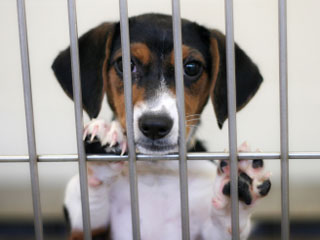
This is the Holiday Season. This is the time of year when we as compassionate and caring humans are supposed to think about the needs of others more than our own needs. The time of year when we are supposed to care more about the less fortunate and then ourselves. Well, it is now the time of year for us to stop thinking about being a good person and start being one.

There are thousands of dogs and cats in local shelters near you that need desperately need your donation TODAY in order to, quite literally, survive the Holiday season. They need you to NOT spend $20 on Starbucks for you and the kids, but instead take that money and make a donation to their shelter. Their lives depend upon you perhaps spending a little less on dinner at that lovely restaurant that you like so much, and instead putting that money into the gift of life for animals that only want to find a forever home with someone that will love them like they desperately deserve.

Please, take 5 minutes right now, and make a donation to the SPCLA shelter, or any rescue organization of your choice. If you do not know where to give your money, see our web page for a list of rescue organizations that would LOVE your help and support, both financially AND in the gift of your time! These animals have done nothing wrong. They have not asked to be put in animal jail with only the HOPE that someone will come and love them. They are asking for your help, and they deserve it.

Now. 5 minutes, and animals will live. Please help

Sunday, December 12, 2010

Better Dog Food Means Less Dog Poop!

OK, as you all know there are only so many ways do do things, like making dog food. If it is made of good, nutritional  ingredients there is a certain minimum cost to produce. Make sense? Well then, it makes one ponder how good the 50 pound bags for under $20 can be, and how to they make it so cheap? Well, the answer is right on the label.In this first picture you will see what we consider 'bad.'

When we started looking for our first dog (after we had to put down the last 2 from old age and disease) we started looking into dogs, dog training, dog collars, leashes, and yes, dog food. One of the first things that we learned right after getting Hondo was that most of the cheaper dog foods will have a lot of fillers in them; specifically corn and corn gluten (the REALLY bad one.) Theses (and others) are used to basically make the real food go farther, and thus be less expensive when it hits the store shelves. Check out the second picture and what the ingredients list looks like. This is really good stuff I would be very happy feeding to our dogs!

There are a couple of problems with these fillers in your dogs food:
  1. Many dogs, like our Hondo, have skin issues and these fillers can cause these issues to become much worse. We didn't know Hondo had skin issues until we bought crappy food one day and it really make Hondo's skin issues flair up. As soon as we changed to a better quality of food, it immediately went away. 
  2. This one is the biggie (literally!) The parts of the food that your dog's system absorbs and uses are pretty much only the good stuff in the food. So with cheap food full of fillers, this means that there is a lot of 'stuff' that has to go somewhere. Where might you think that is? Exactly! However with better quality food your dog's system absorbs more of it. This means less waste and smaller stools!
  3. Because your dog is actually using more of the food he is eating, you end up being able to cut back a little on the amount of food you feed them. This reduction in the amount can easily off-set the increase in the cost of the food  you are feeding them. With our two odogs we have seen that it really comes out about even in the end. 
So how do you know what good dog food is? Well, first and foremost do your homework. Find out what the 'bad stuff' is.I suggest a Google search or starting with this article. Great stuff! Next, always check the label of anything you intend on feeding your dog. The 2 biggies that for us automatically exclude a dog food is if corn meal or corn gluten meal are in the top half of the ingredient list. Now, I will tell you that while I love my dogs, they are in fact dogs. I do not feed them the people grade ready to cut food you seen in the deli case at places like PetSmart, etc. We check labels and find the best food that we can at a reasonable price.

One of the things we have always done with our dogs is to feed them a variety of things regularly. We rarely buy the same food again and again. We buy a big bag that lasts 3 - 4 weeks, then something new. During that month they get good scraps and training treats of all kinds. We feel this desensitizes them and prevents them from getting sick should they have to eat something new. Now, we are lucky in that neither of our dogs have sensitive stomachs. This might not work for you. If not, find a good quality food that your dog likes and can tolerate, and stick with it. 

OK, here is that recap we all love (especially those that skim the important detail above!) 
  • DO YOUR HOMEWORK!
  • Check Dog Food Labels!
  • Buy Good Quality Dog Food
  • Dog Happier and Eats Less
  • You happier and Pick Up Less Poop!

This looks like another of those Win / Win's we all like so much!

Stop by www.capawblehands.org to see more information, articles, and pictures of our cool dogs.